Eight months after a devastating earthquake reduced large parts of Kutch in Gujarat to rubble on January 26, 2001, Narendra Modi received a call from the Bharatiya Janata Party (BJP) leadership that would change the direction of his life and the political trajectory of India.
Then a 51-year-old national general secretary (organisation) of the party, Modi was involved in the relief and rehabilitation work in the aftermath of the tragedy that killed nearly 20,000 people.
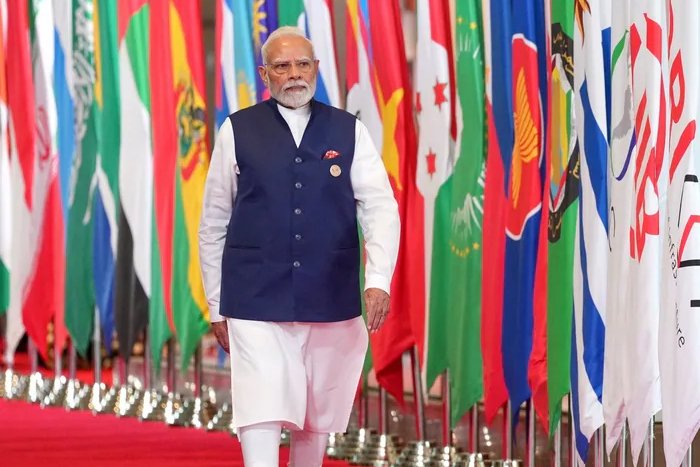
Weeks later on October 7, dressed in his trademark short-sleeve kurta, Modi was sworn in by governor Surendra Singh Bhandari as the 14th chief minister of Gujarat, replacing his party colleague and mentor-turned-bete noire Keshubhai Patel. The date marked the beginning of a political career that catapulted him to the very top of Indian politics. On October 7, he will complete 25 years in public service – of which he’s spent 4,495 days as India’s longest continuously-serving elected prime minister.
Modi the administrator
The man from Gujarat had earned an early reputation in the party for his organisational skills, his deftness in taking over new roles, and adaptability. But the new position as CM came with challenges that were both unfamiliar and daunting. The earthquake triggered a groundswell of not just grief but anger over poor administration. The state was battling drought for many years, and while people scrambled for water and basic amenities, the ruling dispensation was seen as ineffective and incohesive.
Modi had his work cut out. The priority however, was rebuilding the quake-ruptured towns and villages.
“The very first meeting that he chaired after assuming office laid down what was to become his style…setting deadlines, fixing accountability and taking decisions that are not easy and even politically expedient,” said a senior leader of the Rashtriya Swayamsevask Sangh (RSS), the ideological fount of the BJP. The leader has seen the PM work in various capacities, including as a full-time RSS worker.
The first year in the CM’s office set the template for the remaining 11 and many practices such as the 100-day timelines for getting big-ticket projects off the ground were later replicated at the Centre, when Modi led the BJP to a spectacular win in the 2014 Lok Sabha polls.
“He is candid about his early days and how with almost no administrative experience, he took over the reins of a crisis-ridden state. His familiarity with the problems that the poor and the marginalised face helped him push for policies that changed their lives. The Sangh’s ideology and thrust on antyodaya [uplifting the last person in the queue] was the bedrock of his social welfarism,” said the RSS leader quoted above.
In interviews to the media, Modi often spoke about being given charge of the state during testing circumstances and how his mother had asked him to work for the poor.
“When I took oath as CM, I remember my mother telling me – I do not have much understanding of your work but I only seek two things. First, you will always work for the poor and second, you will never take a bribe. I also told people that whatever I do will be with the best intent and will be inspired by a vision to serve the very last person in the queue,” the PM said on X in 2025.
Article source: hindustantimes.com