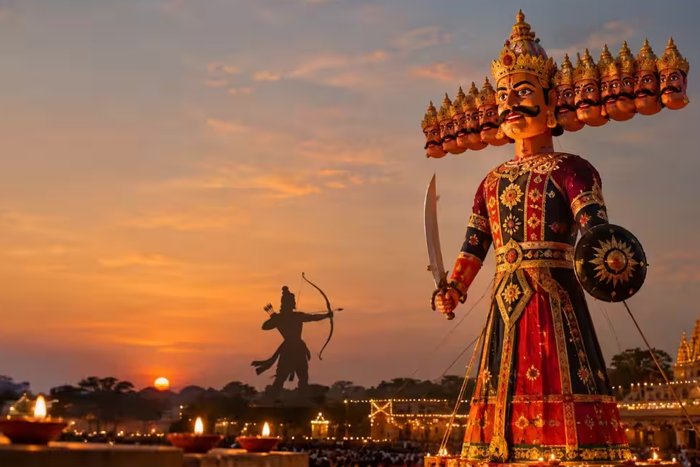
Dussehra 2026, also known as Vijayadashami, will be celebrated on Tuesday, October 20, in most parts of India. However, some eastern regions, including Bengal, observe Vijayadashami on Wednesday, October 21. The difference is linked to the timing of the Dashami Tithi and regional calendar traditions.
The festival marks the victory of good over evil. It commemorates Lord Rama’s victory over Ravana and Goddess Durga’s triumph over Mahishasura. Here is the date, puja muhurat, rituals and mantras to know.
Dussehra 2026: Is it on October 20 or 21?
According to the Hindu Panchang for New Delhi, Dussehra falls on October 20. Bengal Vijayadashami will be observed on October 21, following regional traditions. The Dashami Tithi begins at 12:50 pm on October 20 and ends at 2:11 pm on October 21.
In much of North, West and Central India, the festival is observed on October 20 because Dashami is present during the afternoon period considered auspicious for Vijayadashami rituals.
Dussehra 2026: Puja Muhurat And Tithi Timings
According to Drik Panchang for New Delhi, the important timings are:
Dussehra: Tuesday, October 20, 2026 Dashami Tithi begins: 12:50 pm on October 20 Dashami Tithi ends: 2:11 pm on October 21 Vijay Muhurat: 1:59 pm to 2:45 pm on October 20 Aparahna Puja time: 1:14 pm to 3:30 pm on October 20
These timings are for New Delhi and may vary by location. Check a local Panchang before performing rituals.
Dussehra 2026: Puja Vidhi And Rituals
Devotees begin the day by bathing, wearing clean clothes and offering prayers to Lord Rama and Goddess Durga. Families may perform special pujas and seek blessings for prosperity, courage and success.
Aparajita Puja and Shami tree worship are also associated with Vijayadashami in several traditions. In many parts of India, people attend Ramlila performances and gather to watch Ravana Dahan after sunset. The exact time for the burning of effigies depends on local arrangements.
Dussehra 2026: Mantras to chant on Vijayadashami
Devotees chant prayers and mantras on Dussehra to seek blessings for courage, peace, prosperity and protection. One of the commonly recited prayers is “Om Shri Ramaya Namah”, dedicated to Lord Rama, who represents righteousness and virtue. Devotees also chant “Shri Ram Jai Ram Jai Jai Ram” to express their faith and devotion to the deity.
Why is Dussehra celebrated?
Dussehra represents the triumph of righteousness over wrongdoing. In the Ramayana tradition, Lord Rama defeats Ravana to rescue Sita. In the Durga tradition, the festival celebrates Goddess Durga’s victory over Mahishasura.
The festival encourages people to choose truth, courage and compassion in everyday life. While October 20 is the main Dussehra date in most parts of India in 2026, regional observances may differ according to local customs and Panchang calculations.
Article source: moneycontrol.com