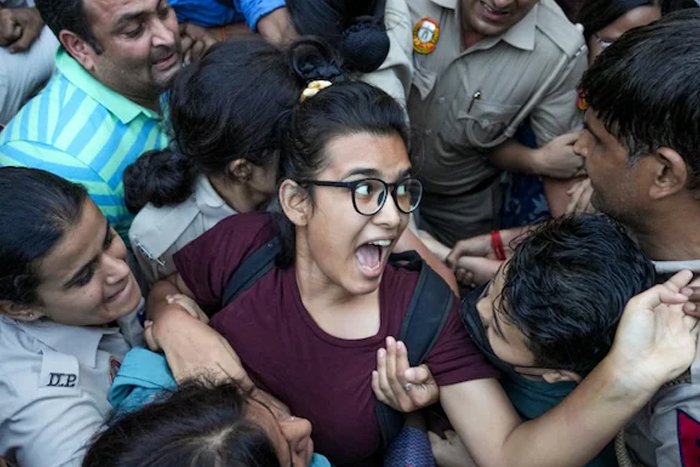
The Delhi High Court has dismissed AISA president Neha Bora’s plea challenging a notice issued by a Special Executive Magistrate (SEM) directing her to furnish a Rs 10,000 bond with a surety to maintain peace during the inquiry and appear before the lower court.
The Delhi High Court has dismissed AISA president Neha Bora’s plea challenging a notice issued by a Special Executive Magistrate (SEM) requiring her to furnish a Rs 10,000 personal bond with one surety to maintain peace during an inquiry.
However, the court said the SEM must provide Bora with all the material relied upon in the proceedings. It also directed the magistrate to consider the scope and implications of Section 135 of the Bharatiya Nagarik Suraksha Sanhita (BNSS), particularly whether Bora could be required to furnish a bond at the outset or whether the need for one should be considered as the inquiry progresses, depending on whether subsequent incidents indicate a threat to peace.
Section 135 of the BNSS deals with the inquiry into the truth of the information underlying preventive proceedings. It also provides for a magistrate to require a bond during the inquiry in circumstances where immediate preventive action is considered necessary.
The Delhi Police opposed Bora’s petition, arguing that it was not maintainable. In her plea, drafted by lawyer Abhik Chimni, Bora contended that the notice was vague and factually inaccurate and did not provide material supporting the claim that she was likely to breach the peace.
The notice, issued on October 17 under Section 126 of the BNSS, followed Bora’s preventive detention after she participated in the ‘Lehra Do Tiranga’ march in Delhi on October 16. The demonstration called for the resignation of Chief Election Commissioner Gyanesh Kumar over alleged anomalies in the Special Intensive Revision (SIR) of electoral rolls.
The notice directed Bora to appear before the SEM on October 19 and show cause why she should not be required to furnish the bond and surety to maintain peace during the inquiry.
Section 126 of the BNSS allows an SEM to require a person to execute a bond to maintain peace when credible information indicates that the person may breach the peace, disturb public tranquillity or commit an act likely to cause such a disturbance.
The proceedings stem from allegations that Bora raised slogans at Mandi House on October 16, repeatedly protested near Jantar Mantar despite prohibitory orders imposed under Section 163 of the BNSS, and encouraged people to join the demonstration.
During the hearing, Bora’s senior counsel argued that citizens did not need permission to hoist the national flag and that seeking a change of regime was not improper in a democracy. The Delhi Police, however, argued that in a democratic set-up, a regime could be changed only through elections, not by “lumpen elements congregating in New Delhi.”
The detailed judgment, including the court’s reasoning and directions to the SEM, is awaited.
Article source: indiatoday.in