
Published
2 hours agoon
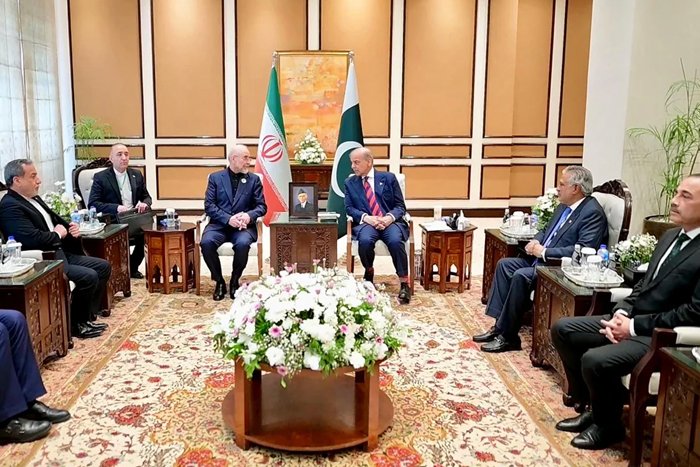
Direct talks between the US and Iran ended in a stalemate after more than 21 hours of discussions in Islamabad on Sunday. The talks, mediated by Pakistan, came after a two-week ceasefire was announced and were seen as crucial in determining the trajectory of a conflict that has disrupted global supply chains.
US Vice President JD Vance, who was in Islamabad to lead the negotiations for Washington, briefed the press on Sunday morning about the meeting’s outcome.
“The bad news is that we have not reached an agreement, and I think that’s bad news for Iran much more than it’s bad news for the United States of America,” Vance said. “We’ve made very clear what our red lines are.”
The negotiations marked the highest-level engagement between the two countries since the 1979 Islamic Revolution. The US delegation was led by Vance, who was joined by Jared Kushner and Steve Witkoff. On the Iranian side, Parliament Speaker Mohammad Bagher Ghalibaf headed a 71-member delegation.
Both sides engaged in prolonged and intensive discussions across a wide range of issues, underscoring the high stakes and complexity of the talks.
Iran’s nuclear programme and uranium enrichment emerged as the key sticking point during negotiatoins. According to Vance, Washington had insisted on a “firm commitment” from Tehran that it would not pursue nuclear weapons or develop the capabilities required to quickly achieve them.
“I won’t go into all the details because I don’t want to negotiate in public after we negotiated for 21 hours in private. But the simple fact is that we need to see an affirmative commitment that they will not seek a nuclear weapon and that they will not seek the tools that would enable them to quickly achieve a nuclear weapon,” Vance said.
These demands were part of the US’ 10-point peace proposal and reflect longstanding concerns that have often been cited by US President Donald Trump.
Iran, on the other hand, characterised the US position as “excessive”, according to the Iran’s semi-official Tasnim news agency. The report indicated that Washington had also pushed for concessions related to the Strait of Hormuz and the removal of nuclear materials, demands that Iran argued went beyond what the US had been able to achieve during the conflict.
Following the collapse of negotiations, Vance acknowledged that the discussions had been “substantive” but ultimately unsuccessful. He said that while there had been meaningful engagement on several issues, the two sides were unable to bridge their differences.
He reiterated that the United States had clearly communicated its red lines, as well as the areas where it was willing to show flexibility. However, he said the Iranian delegation chose not to accept those terms.
“We just could not get to a situation where the Iranians were willing to accept our terms,” Vance said. The US delegates were “quite flexible” and “accommodating”, but “unfortunately, we were unable to make any headway”, the US vice president said.
He added the US delegation remained in constant communication with Trump throughout the process, speaking to him multiple times during the 21-hour marathon. He also said he spoke with Trump anywhere from a “half dozen” or a “dozen times” during the negotiations.
Vance described the US proposal as its “final and best offer” and did not indicate any immediate extension of the talks before departing for Washington. “We were constantly communicating with the team because we were negotiating in good faith. And we leave with a very simple proposal: a method of understanding that is our final and best offer. We will see if the Iranians accept it,” said Vance, who left for Washington after the talks, not hinting at extension of discussions.
Soon after Vance’s announcement, Iran’s Foreign Ministry spokesperson Esmaeil Baqaei confirmed that no agreement had been reached. In a post on X, he said that numerous messages and texts had been exchanged between the two sides during the negotiations.
“In the past 24 hours, discussions were held on various dimensions of the main negotiation topics, including the Strait of Hormuz, the nuclear issue, war reparations, lifting of sanctions, and the complete end to the war against Iran and in the region,” he wrote. “The success of this diplomatic process depends on the seriousness and good faith of the opposing side, refraining from excessive demands and unlawful requests, and the acceptance of Iran’s legitimate rights and interests.”
In a Telegram post, Iranian state broadcaster IRIB said, “The Iranian delegation negotiated continuously and intensively for 21 hours in order to protect the national interests of the Iranian people; despite various initiatives from the Iranian delegation, the unreasonable demands of the American side prevented the progress of the negotiations. Thus the negotiations ended.”
The failure to reach an agreement raises fresh uncertainty over whether the ceasefire will hold and whether both sides will return to the negotiating table.
Vance’s remarks suggest that there may be limited immediate scope for further talks, as he characterised the US proposal as final. However, some analysts believe diplomacy is not yet over.
In a post on X, Asia Pacific Foundation Non-Resident Senior Fellow Michael Kugelman said the US has strong domestic political incentives to secure a deal that would allow it to exit the conflict. He noted that the presence of a high-level US delegation in Pakistan reflects Washington’s commitment to negotiations.
“More talks could come-but unclear if they’ll be in Pak or elsewhere,” he said.
The collapse of talks is likely to have immediate implications for global markets and regional stability. Oil and gas markets, in particular, are expected to react sharply to the uncertainty, while broader investor sentiment may be affected by the lack of a diplomatic breakthrough.
Article source: business-standard.com