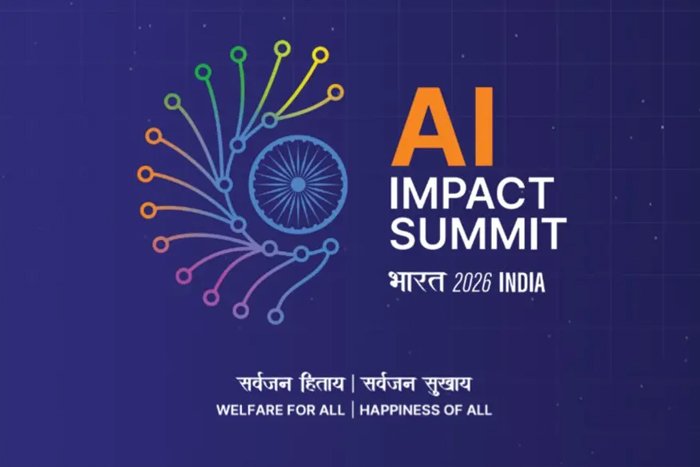
As New Delhi prepares to host the India AI Impact Summit 2026 from February 16 to 20, the city is bracing for a high-profile week of technological discourse and global diplomacy. With over 2 lakh attendees expected to converge at Bharat Mandapam, the New Delhi Municipal Council (NDMC) and Delhi Police have rolled out an extensive roadmap to ensure the event remains seamless for both delegates and residents.
The five-day summit is themed ‘Sarvajan Hitaya, Sarvajan Sukhaya’ (Welfare for All, Happiness for All).
If you are planning to attend or pass through the area, here is a comprehensive primer.
Registration and entry for AI sumit
The Ministry of Electronics and Information Technology (MeitY) has kept registration for the summit free of charge. Prospective attendees can register via the summit’s web portal; through the DigiYatra platform, or by downloading the India AI Impact Summit app.
Upon arrival at the venues — which include Bharat Mandapam, Sushama Swaraj Bhawan, and the Ambedkar Centre — guests can gain entry by scanning a QR code there. While the event is open to the public on most days, officials have clarified that specific sessions on February 19 will be restricted due to security protocols and limited seating in the main arena.
Traffic advisory: Roads to avoid
The Delhi Police issued an advisory regarding elaborate traffic restrictions. Commuters are urged to plan their travel well in advance.
Traffic movement will be regulated or restricted on several key arterial roads, including:
- Mathura Road and Bhairon Marg (identified as restricted areas during VIP movement)
- Janpath, Akbar Road, and Safdarjung Road
- Sher Shah Road, Subramania Bharti Marg, and Rajesh Pilot Marg
- Teen Murti Marg, Mother Teresa Crescent, and Sardar Patel Marg.
- Firoz Shah Road, Shanti Path, and Satya Marg.
For those heading to the Indira Gandhi International Airport, the police suggestED using NH-48 and the Sector-22 Dwarka Tunnel. Railway passengers bound for New Delhi, Old Delhi, or Hazrat Nizamuddin stations should stick to the Ring Road, Ashram Chowk, and Vande Mataram Marg corridors. Non-Delhi bound vehicles will be diverted to the Eastern and Western Peripheral Expressways to decongest the city centre.
Metro ops during AI summit
Given the scale of the event, officials have strongly recommended the use of public transport, specifically the Delhi Metro, which will continue to operate normally. The metro station near Gate 10, Pragati Maidan is the most convenient entry point.
For those arriving by private vehicles, parking has been designated at the Delhi Zoo, National Stadium, and Jawaharlal Nehru (JLN) Stadium, with shuttle services plying to and from the summit venues. To ensure digital connectivity, telecom operators have been directed to optimise their networks around Bharat Mandapam for uninterrupted mobile data services, officials said.
CBSE boards at same time
The AI summit coincides with the start of the CBSE examinations on February 17. Delhi Police and the education department have coordinated to ensure students face minimal disruption, officials said.
Students are required to reach their examination centres by 10am for the 10:30am start. Police field staff have been sensitised to assist students, and passes are being facilitated through school principals to allow student transport through restricted zones. Parents and students are advised to maintain a buffer time during their commute to avoid last-minute delays caused by VIP movements.
CCTV monitoring, beautification
The NDMC has transformed the capital into a “smart and future-ready” zone for the summit, its officials said. An Integrated Command and Control Centre (ICCC) will act as the “third eye”, monitoring the area 24×7 via a network of over 730 CCTV cameras integrated from the NDMC, Delhi Police, and the PWD.
In addition to security, the city has undergone a massive beautification drive. Visitors can expect to see 15,000 decorative plants, 23 floral fountains, and a Tulip Festival at Shanti Path. Sanitation is a high priority, with the NDMC deploying mechanical road sweepers and GPS-tracked waste vehicles to achieve a zero-waste conference, according to its officers Also, 20 air quality sensors have been installed to monitor atmospheric parameters.
Article source: hindustantimes.com