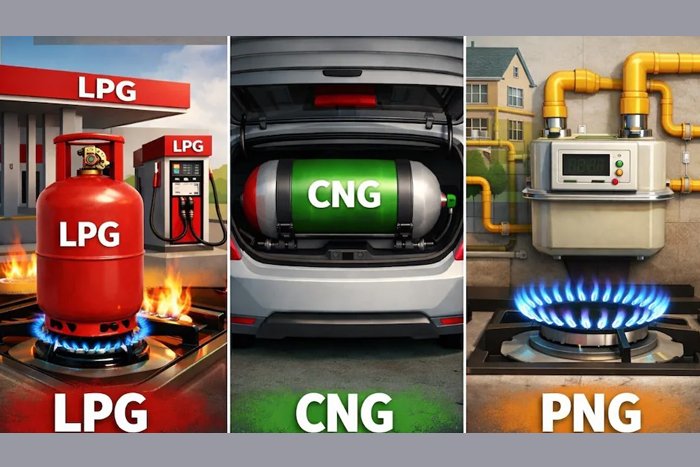
LPG, CNG, PNG prices today: Domestic LPG, CNG, and PNG prices remain stable across major metro cities, insulating retail consumers from ongoing fluctuations in international energy benchmarks. The steady pricing comes at a critical juncture as global oil markets experience heightened anxiety, driven by sharp movements in crude benchmarks
Delhi offers the lowest CNG and PNG rates among all four metros, primarily driven by lower local taxes and high-density pipeline distribution. While domestic LPG rates are benchmarked at uniform import parities, local levies create noticeable price gaps between the northern and southern corridors.
Domestic LPG cylinders, standard across millions of Indian kitchens, remain sensitive to global crude and international benchmark fluctuations. State-run oil marketing companies adjust non-subsidised rates monthly, with a standard 14.2-kg domestic cylinder priced differently across states due to local taxes and transportation logistics.
14.2-kg LPG cylinder rates on September 27
Cities
Price (₹/cylinder)
Delhi
942
Bengaluru
944.50
Hyderabad
994
Mumbai
941.50
Chennai
957.50
Kolkata
968
Jaipur
945.50
Noida
939.50
Gurugram
950.50
Chandigarh
951.50
Commercial (19 kg) LPG cylinder rates on September 27
Cities
Price (₹/cylinder)
Delhi
2,747.50
Bengaluru
2,831
Hyderabad
2,996
Mumbai
2,701
Chennai
2,916.50
Kolkata
2,884
Jaipur
2,776
Noida
2,747.50
Gurugram
2,764.50
Chandigarh
2,769.50
CNG prices in major cities on September 27
Cities
Price (₹/kg)
Delhi
86.98
Bengaluru
97
Hyderabad
112
Mumbai
88
Chennai
97.50
Kolkata
93.50
Jaipur
97.50
Noida
95.59
Gurugram
92.01
Chandigarh
93.80
PNG prices across major cities on September 27
Cities
Price (₹/SCM)
Delhi
49.59
Bengaluru
53
Hyderabad
56
Mumbai
52
Chennai
52
Kolkata
50
Jaipur
51.50
Noida
49.46
Gurugram
48.40
Chandigarh
57.78
US-Iran war update
Iran has formally submitted a seven-day roadmap to the United States via Qatari mediators to end the seven-month-old military conflict and reopen the strategically vital Strait of Hormuz.
Announced by Iranian Foreign Minister Abbas Araghchi, the plan outlines a phased framework to halt hostilities on all fronts, but it is strictly conditional upon Washington lifting its naval blockade of Iranian ports, unfreezing assets, and waiving oil sanctions. Iran has stated it will reopen the Strait on the final day of the seven-day period once the U.S. complies, framing the situation as a choice that now rests entirely with the United States.
However, the high-stakes diplomatic effort to pause regional hostilities has collapsed after US President Donald Trump rejected a seven-day ceasefire proposal put forward by Tehran, signaling that military operations are expected to resume shortly after the November midterm elections, according to a Wall Street Journal report.